

Fashion Courses in Milan: How to Start Your Career
START HERE
Would you like to explore fashion before enrolling in a complete course?
Try a free online fashion lesson:https://academy.milanfashioncampus.eu/freelessons
Explore all short fashion courses in Milan:https://www.milanfashioncampus.eu/fashion-short-courses-milan
Discover all online fashion courses:https://academy.milanfashioncampus.eu

Quick Answer
You can start a career in fashion by choosing a specific professional direction, learning practical skills, completing real projects and creating a focused portfolio. Short fashion courses in Milan can help you test different career paths without immediately committing to a multi-year degree.
How Do You Actually Start a Career in Fashion?
The first step is not choosing a school or sending job applications. The first step is understanding which area of fashion suits your abilities, interests and personality.
The fashion industry includes many different professional roles. You could work in:
Fashion styling
Personal styling
Editorial styling
Womenswear or menswear design
Trend forecasting
Fashion buying
Visual merchandising
Fashion photography
Social media and content creation
Fashion branding
E-commerce
Public relations
Fashion marketing
Portfolio development
A person who enjoys working directly with clients may be suited to personal styling. Someone who prefers visual concepts, photography and storytelling may prefer editorial styling. A creative person interested in silhouettes, fabrics and collections may be more attracted to fashion design.
Before investing in a long educational programme, you should identify two or three possible directions and test them through short, practical projects.
Step 1: Choose a Specific Fashion Direction
A common mistake is saying, “I want to work in fashion,” without defining the type of work.
Fashion companies do not normally recruit someone simply because that person loves fashion. They look for people who can perform a particular function.
Instead of starting with a general ambition, ask yourself:
Do I enjoy creating images or designing products?
Do I want to work with clients, models or brands?
Am I more interested in creativity, business or communication?
Do I prefer individual work or collaborative projects?
Would I like to work freelance or inside a company?
Do I enjoy researching trends and consumer behaviour?
Do I want to create physical products or visual content?
Your answers will help you narrow your direction.
Career Direction Table
Your Main Interest | Possible Fashion Career | Useful First Course |
Helping people improve their image | Personal stylist or image consultant | Personal Fashion Styling |
Creating images for magazines and campaigns | Editorial fashion stylist | Media Editorial Styling |
Designing garments and collections | Fashion designer | Womenswear or Menswear Design |
Studying future consumer preferences | Trend forecaster | Fashion Trend Forecasting |
Selecting products for shops | Fashion buyer | Fashion Buying |
Presenting your creative work professionally | Designer or stylist | Fashion Portfolio |
Promoting fashion brands online | Fashion content creator | Social Media for Fashion |
The objective is not to make a permanent decision immediately. It is to choose a practical starting point.
Step 2: Learn Skills That Produce Visible Results
Fashion education should help you create something that can be evaluated.
Depending on your chosen direction, this could be:
A styling proposal
A client analysis
A moodboard
A trend report
A mini fashion collection
An editorial photoshoot
A digital presentation
A fashion portfolio
A brand concept
A buying proposal
Employers and potential clients need evidence of your abilities. A certificate can support your profile, but your projects demonstrate what you can actually do.
For example, an aspiring stylist should be able to explain why particular colours, proportions and garments work for a person or creative concept. A fashion designer should be able to present research, silhouettes, technical ideas and a coherent collection direction.
This is why practical exercises, individual feedback and project development are important when choosing a course.
Step 3: Build a Focused Portfolio
Your portfolio should not contain every exercise you have ever completed.
It should communicate:
What area of fashion interests you
How you research and develop ideas
How you solve visual or commercial problems
What makes your creative perspective recognisable
What kind of professional opportunity you are seeking
A beginner portfolio can contain student projects. Those projects should still be carefully selected, edited and presented.
For a styling portfolio, you could include:
Personal styling analysis
Colour and body-shape studies
Client profiles
Outfit proposals
Editorial moodboards
Photoshoot concepts
Final editorial images
For a design portfolio, you could include:
Visual research
Concept development
Colour and fabric direction
Fashion illustrations
Technical drawings
Collection plans
Final presentation pages
Portfolio quality is more important than the number of pages. Five well-developed projects are usually more convincing than twenty unrelated exercises.
Step 4: Gain Experience Before Looking for the Perfect Job
Your first fashion experience does not have to be a permanent position with a famous company.
You can begin by:
Assisting a stylist
Supporting a small photoshoot
Creating social content for an independent brand
Styling a friend or first client
Collaborating with a photographer
Helping at a showroom
Completing a personal editorial project
Producing a trend report
Working with a local boutique
Developing a small digital portfolio
These first experiences help you understand professional expectations, deadlines, teamwork and communication.
They also give you material for your portfolio and CV.
Step 5: Develop Both Creative and Professional Skills
Creative skills are only one part of a fashion career.
You also need to learn how to:
Present your ideas clearly
Respect deadlines
Receive and apply feedback
Communicate with clients
Organise files and projects
Explain your decisions
Work within a brief
Collaborate with other professionals
Understand budgets and limitations
A stylist may have strong taste but still struggle professionally if they cannot interpret a client’s needs. A designer may produce beautiful illustrations but need to improve collection coherence or presentation. A content creator may have interesting ideas but need stronger planning and brand awareness.
A course should therefore help you develop a working method, not only provide information.
Why Study Fashion in Milan?
Milan allows students to connect classroom learning with a city where fashion is visible through shops, exhibitions, showrooms, street style, design culture and professional events.
Studying in Milan can help you understand how Italian fashion combines creativity with product awareness, presentation, quality, image and commercial thinking.
However, simply being in Milan is not enough. You still need a structured programme, practical exercises and professional guidance.
Milan Fashion Campus offers short courses in English for beginners, international students, career changers and people who want to improve an existing portfolio. Its courses are modular and can start every Monday, allowing students to choose a duration and combination suited to their objectives. nday Start Dates Important?
Traditional programmes often have only one or two annual intake dates. This can be difficult for international students, professionals and people organising a short stay in Italy.
The possibility of starting every Monday provides greater flexibility. Students can select a period that works with their travel plans, professional commitments and available budget.
Courses can also be combined. For example, a student might begin with trend forecasting, continue with styling and finish with a portfolio course.
This modular structure can help students create a personalised educational path rather than following a fixed programme that includes subjects they do not need.
Course availability and school closures should always be confirmed before booking travel.
Why Learn from an Italian Fashion School?
Italian fashion education can offer a particular perspective on:
Style and proportion
Visual sensitivity
Materials and textiles
Product quality
Personal image
Fashion communication
Collection coherence
The relationship between creativity and the market
Learning from professionals with industry experience also helps students understand the difference between personal taste and a professional fashion decision.
At Milan Fashion Campus, the teaching approach is connected to the professional experience of its founder and director, Angelo Russica, whose background includes work with Gianni Versace and consultancy for Italian fashion groups. on Course Should You Choose?
The right course depends on what you want to be able to create by the end of your studies.
1. Fashion Foundation Course
A foundation programme is appropriate when you are interested in fashion but have not yet chosen between design, styling or another specialisation.
The Fashion Foundation Course introduces areas such as visual research, drawing, styling, textiles, trend forecasting, digital tools and portfolio development. It is designed to help beginners build basic skills and understand which part of the industry may suit them best. rmation:**https://www.milanfashioncampus.eu/fashion-foundation-course
This path may be useful for:
Beginners with no fashion background
Students preparing for further fashion education
Young students exploring career options
Career changers who need a broad introduction
Students who need an entrance portfolio
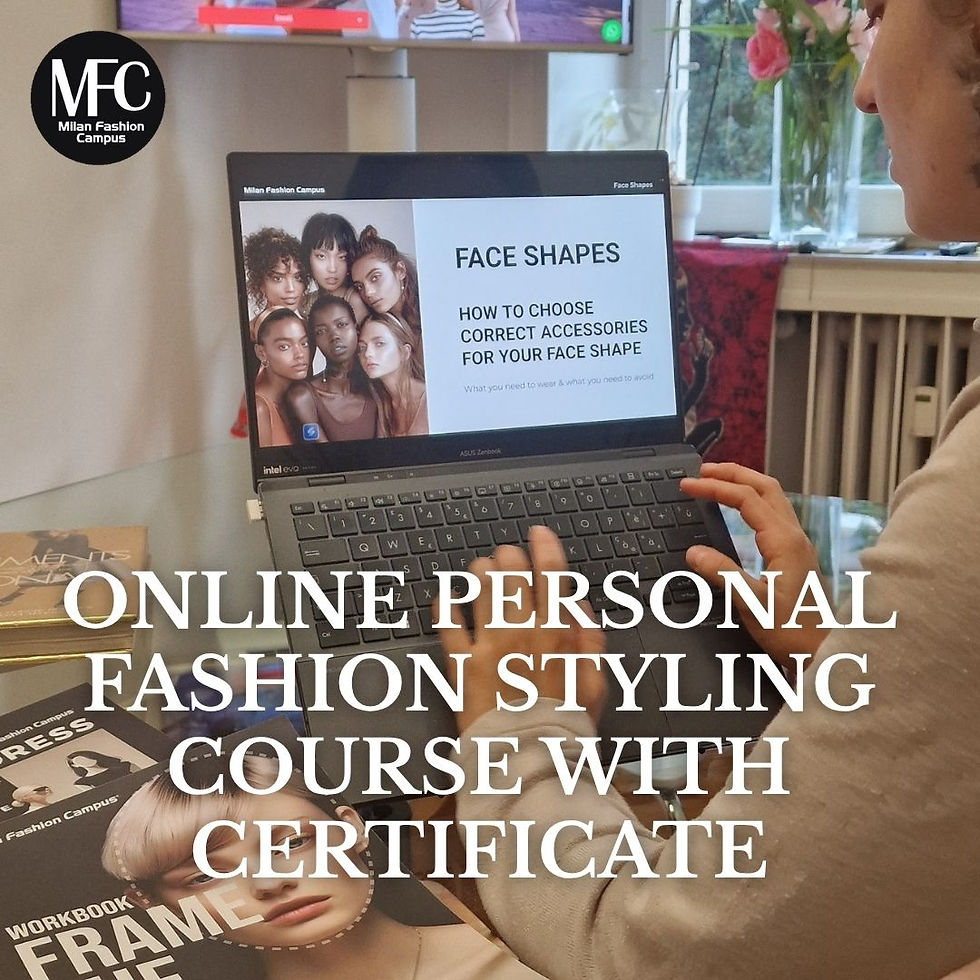
2. Women’s Personal Fashion Styling Course
Personal styling focuses on helping individuals make clothing and image decisions based on their characteristics, lifestyle and objectives.
Students can study areas such as:
Body and face-shape analysis
Colour analysis
Personal style
Client consultation
Outfit coordination
Garments and accessories
Moodboard creation
Trend research
The course is available in different short formats and is taught in English or Italian. Milan-based sessions start every Monday. rmation:**https://www.milanfashioncampus.eu/fashion-styling-course
This path may be useful for people who want to work as:
Personal stylists
Image consultants
Personal shoppers
Wardrobe consultants
Freelance fashion advisers
E-commerce stylists
3. Media Editorial Fashion Styling Course
Editorial styling is different from personal styling.
A personal stylist works around the needs of a real client. An editorial stylist creates a visual story for an image, publication, campaign or creative project.
Editorial styling requires collaboration with photographers, models, make-up artists and other creative professionals. Students need to understand visual concepts, moodboards, garments, accessories, composition and photoshoot organisation.
Course information:https://www.milanfashioncampus.eu/fashion-shooting-workshop
This path may be useful for students interested in:
Fashion magazines
Editorial photography
Creative campaigns
Celebrity styling
Fashion content creation
Lookbooks
Photoshoot production
Additional Portfolio Course
Students who already have projects but need to improve their presentation can consider a dedicated portfolio programme.
Fashion Portfolio Course:https://www.milanfashioncampus.eu/blankcatheri
A portfolio course can help organise previous work, eliminate weaker projects, create missing content and develop a clearer professional identity.
Short Course or Fashion Degree?
A fashion degree and a short fashion course serve different purposes.
A degree normally offers a broad academic experience over several years. It may be appropriate for students who want time to explore multiple subjects and experience a complete university environment.
A short course is more concentrated. It may be appropriate when you:
Want to test fashion before making a long commitment
Already know which skill you need
Want to change careers
Need to improve your portfolio
Have limited time in Milan
Want practical training
Need a flexible starting date
Neither option automatically guarantees employment.
The important question is: What will you be able to do and show after completing the programme?
A focused course can be valuable when it produces practical skills and strong portfolio material. A long programme can be valuable when its broader structure matches the student’s objectives.
Read the complete comparison:
Example: Three Different Ways to Begin
Example 1: The Complete Beginner
Sofia enjoys fashion but does not know whether she prefers design or styling.
Her first step could be a Fashion Foundation Course. During the programme, she can test research, drawing, styling, trends and portfolio development before choosing a specialisation.
Example 2: The Career Changer
Daniel works in marketing but wants to move into personal styling.
He does not necessarily need to restart with a multi-year degree. He could take a focused styling course, create client projects, develop a styling portfolio and use his previous marketing experience to promote his services.
Example 3: The Fashion Graduate
Maya already studied fashion design but her portfolio is too academic and does not clearly communicate her personal direction.
Her priority may not be another general course. She may benefit more from portfolio development, trend forecasting or editorial styling experience.
The best starting point is different for every student because career stage matters as much as creative interest.
A Practical Fashion Career Roadmap
The Career Development Schema
Interest↓Choose a professional direction↓Learn the essential skills↓Complete practical projects↓Receive feedback and improve↓Build a focused portfolio↓Gain initial experience↓Create professional contacts↓Apply for jobs or begin freelancing↓Continue specialising
A career in fashion rarely develops in one straight line. You may begin in retail, styling, photography or communication and later move into another area.
Your first course does not need to define your entire future. It should help you make your next decision with greater clarity.
Can You Start Online Before Coming to Milan?
Yes. Online learning can be an effective first step when you are not ready to travel or want to test a subject before investing in an in-person programme.
Milan Fashion Campus offers self-paced online courses with video lessons, practical exercises and course options in styling, design, buying, branding, trends and other fashion subjects. The online academy also provides free trial lessons for students who want to preview the learning experience. lesson:**https://academy.milanfashioncampus.eu/freelessons
Explore the Online Fashion Academy:https://academy.milanfashioncampus.eu
An online-to-Milan pathway can be useful because you can begin studying from home, identify your strongest area and later continue with practical training in Italy.
How Long Does It Take to Start Working in Fashion?
There is no fixed timeline.
Some students can begin accepting small freelance projects after completing a focused course and creating a clear portfolio. Others need more time to practise, specialise or develop professional contacts.
Your progress depends on:
The area you choose
Your previous experience
The quality of your portfolio
The amount of practice you complete
Your ability to communicate and network
The opportunities available in your location
Whether you want employment or freelance work
Instead of asking only, “How long will it take?”, ask:
What can I produce during the next three months that demonstrates my abilities?
A realistic first objective could be to complete three strong projects, create a digital portfolio and contact ten potential collaborators or employers.
Frequently Asked Questions
1. Can I start a fashion career without previous experience?
Yes. Many beginner courses are designed for people with no formal fashion background. Start by learning the fundamental methods of one specific area and completing practical exercises.
2. Do I need a fashion degree to work in fashion?
Not for every role. A degree may be required or preferred for certain positions, but many styling, content, freelance and creative opportunities place strong importance on skills, experience and portfolio quality.
3. Which fashion course is best for beginners?
A foundation course is useful when you have not chosen a specialisation. A short styling or design course may be more appropriate when you already know your preferred direction.
4. Can I study fashion in Milan in English?
Yes. Milan Fashion Campus offers short courses in English for international students. Its Milan courses can begin every Monday, subject to availability and the school calendar.
5. Can a short fashion course help me start a career?
A short course can help you learn focused skills, complete projects and begin a portfolio. It does not guarantee employment, but it can provide a practical first step and clearer professional direction.
6. Do I need a portfolio to apply for fashion jobs?
A portfolio is particularly important for creative roles such as styling, design, photography, trend research and fashion communication. It allows employers and clients to assess your abilities directly.
7. Can I work as a freelance fashion stylist?
Yes. Personal and editorial stylists can work independently, but they also need business skills, client communication, pricing, networking and a professional portfolio.
8. Can I study fashion online before coming to Milan?
Yes. Starting online can help you test a subject, build basic knowledge and prepare for practical in-person training. Free lessons are also available through the Milan Fashion Campus Online Academy.
Final Advice
You do not need to understand the entire fashion industry before starting.
You need to choose one direction, learn the corresponding skills and complete enough practical work to evaluate your progress.
Milan can provide inspiration and industry context, but your career will be built through observation, practice, feedback, portfolio development and professional consistency.
Begin with a course that matches your current stage—not the course that simply sounds most impressive.
Explore Your Starting Point
Review the complete selection of practical fashion courses in Milan and compare the content, duration and expected outcomes of each programme:
Not ready to choose a complete programme yet?
Explore a free online lesson and discover which area of fashion interests you most:

Comments