

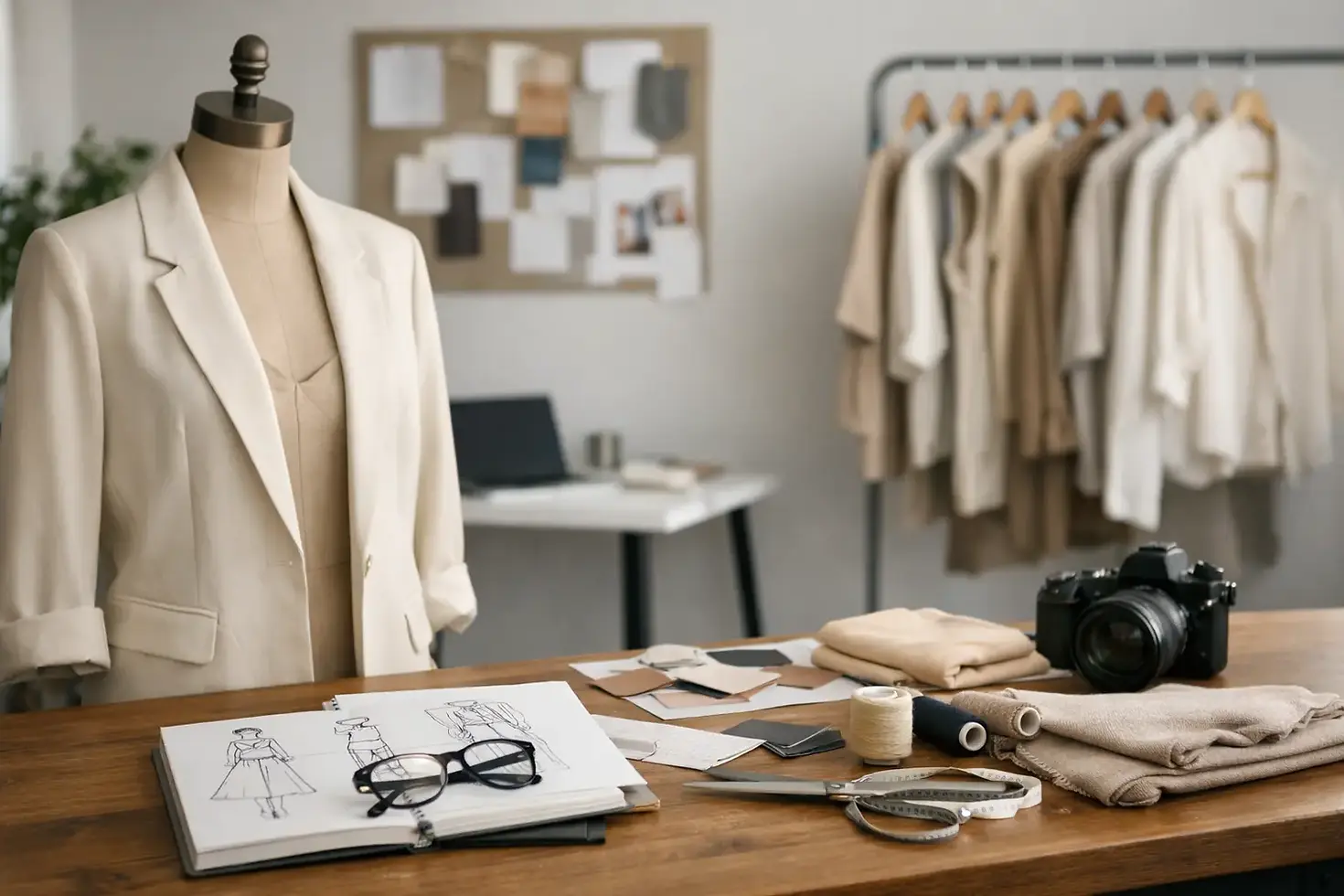
Your Guide to Fashion Brand Launch Basics
A fashion brand rarely fails because its founder lacks ideas. More often, it launches with too many ideas, an unclear customer, and no workable plan for turning sketches into products people can buy. This guide to fashion brand launch basics is designed for emerging designers who want to move from creative ambition to a focused, credible first step.
Launching does not mean having a huge collection, a glossy campaign, or thousands of followers. It means making a clear promise to a specific customer, creating products that support that promise, and building the operational discipline to deliver them. The most successful first launches are usually edited, tested, and financially realistic.
Start With a Point of View, Not a Logo
Your brand identity begins with a position in the market. Before choosing a name, color palette, or Instagram grid, ask what you want to be known for. You may create expressive eveningwear for women who want drama without discomfort. You may focus on refined everyday essentials for creative professionals. You may build a gender-fluid accessories label with a strong material story.
The idea needs to be specific enough to guide decisions. “Sustainable luxury for everyone” is a value statement, but it is not yet a market position. Who is “everyone”? What makes the luxury visible? What does sustainability mean in your supply chain, materials, packaging, or production quantities?
Write a short brand statement that covers three things: the customer, the product category, and the reason your brand deserves attention. This is not a slogan. It is a working tool for deciding what belongs in your first collection and what does not.
Define the Customer in Real Life
A customer profile should feel like a person with habits, not a vague demographic such as “women aged 20 to 40.” Consider where this person shops, what they wear on a normal Tuesday, what frustrates them about current options, and what price they can realistically pay.
For example, a customer who appreciates independent design but buys selectively may respond to a small run of distinctive knitwear. That same customer may not purchase an expensive full wardrobe from an unknown label. Your launch strategy changes when you understand the difference.
Research competitors with curiosity, not imitation. Look at their silhouettes, price points, materials, photography, stockists, reviews, and social media comments. The goal is to identify a gap you can own, whether that is fit, styling perspective, craftsmanship, cultural relevance, or a better customer experience.
Guide to Fashion Brand Launch Basics: Build a Focused Collection
Your first collection should prove your concept, not show every skill you have. A compact range is easier to fund, sample, photograph, explain, and sell. It also gives you time to improve the details that customers will notice immediately: fit, fabric quality, construction, and finish.
Begin with a product architecture. Identify your hero piece, the item that communicates your brand most clearly. Then add supporting products that make sense beside it. If your hero is a sharply cut blazer, the supporting pieces might be a trouser, skirt, shirt, or belt that complete the look and encourage multiple purchases.
Avoid adding products simply because they are popular. A T-shirt, tote bag, or hoodie can be commercially useful, but only if it belongs to your brand world and meets your quality standard. A weak extra item can dilute a strong concept.
Develop Before You Produce
A sketch is the beginning of development, not the final answer. Each style needs clear technical information: measurements, construction details, fabric, trims, color options, labels, and packaging requirements. This information is generally organized in a technical package or tech pack, allowing a pattern maker or manufacturer to understand what must be made.
Sampling is where many first-time founders discover the real work of fashion. A beautiful design may fit poorly, cost too much, require an unavailable fabric, or be difficult to produce consistently. Plan for revisions. The first sample is information, not a finished product.
Fit on more than one body where possible. Check how a garment moves, sits, closes, and wears over several hours. For accessories, test function as carefully as appearance. A bag that looks exceptional but has an awkward closure will create customer dissatisfaction quickly.
Milan can be especially valuable during this phase because the city places emerging creatives close to fabric resources, production knowledge, fashion retail, and visual inspiration. However, location alone does not replace preparation. Bring a clear brief when speaking with suppliers or makers.
Price From Costs, Then Test the Market
Pricing is one of the most misunderstood parts of a launch. Your desired retail price cannot determine your production cost. Instead, calculate every expense connected to each product: fabric, trims, pattern development, sampling, labor, labels, packaging, freight, duties where relevant, payment fees, and a portion of your operating costs.
Then decide how you will sell. Direct-to-consumer sales can support different margins than wholesale, where a retailer needs room to mark up the product. If you hope to do both, your pricing must work for both channels from the start. Otherwise, a wholesale opportunity may look exciting while quietly making the business unprofitable.
There is a trade-off here. Pricing too low can attract initial attention, but it may leave no money for reorders, marketing, customer service, or product improvement. Pricing too high without a clear reason can make customers hesitate. Your materials, design originality, fit, brand presentation, and service all need to support the price.
Build a simple financial plan before committing to quantities. Estimate your minimum order requirements, cash needed for deposits, delivery timing, sales forecast, and break-even point. Be conservative. Fashion production often requires money months before a customer pays.
Choose a Sales Model That Matches Your Stage
You do not need to launch everywhere. A new brand benefits from one primary route to market and a clear way to learn from it. A direct online launch gives you control over storytelling, customer data, and pricing. It also requires you to generate your own traffic and manage fulfillment.
Preorders can reduce inventory risk, especially for made-to-order pieces or limited capsules. The trade-off is that customers must trust a brand that may not yet have an established reputation, and delivery communication must be precise. Never promise timelines you cannot meet.
Wholesale can provide visibility and volume, but retailers expect professional line sheets, delivery reliability, clear margins, and consistent quality. Pop-ups, trunk shows, and appointments can be useful between these models because they let you see how customers react to products in person.
Choose the channel that gives your launch the best balance of reach, learning, and manageable risk. A small direct launch with strong feedback may be more valuable than a wide launch that leaves you with unsold inventory.
Prepare the Brand Materials Buyers and Customers Need
Fashion is visual, but a strong launch needs more than beautiful images. You need product information that makes buying feel easy. This includes accurate descriptions, size guidance, care instructions, clear shipping and return policies, and photographs that show both the full look and important details.
Your campaign should communicate the feeling of the brand, while your e-commerce images should answer practical questions. Customers want to know how the garment fits, what the fabric looks like, and how it can be worn. If possible, show products on different body types or provide detailed measurements.
For wholesale conversations, prepare a concise line sheet with product names, images, colors, wholesale and retail prices, order deadlines, delivery windows, and minimums. For press or collaborators, have a short brand biography and founder story ready. Keep every document consistent with your point of view.
Launch, Listen, and Improve
A launch date is not the finish line. It is the beginning of market feedback. Track what customers ask, save, try on, return, and purchase. Pay attention to repeated questions about fit, price, delivery, or styling. These are not interruptions. They are signals that can improve your next release.
Do not change direction after one quiet week, but do not ignore evidence either. A slow-selling item may need better imagery, clearer explanation, a different price, or removal from the range. A product that consistently receives attention may deserve more colors, stronger inventory planning, or a dedicated campaign.
Build a rhythm rather than chasing constant novelty. Fashion brands earn trust when their product, communication, and delivery experience feel connected over time. Your first launch should create enough clarity to make the second one smarter.
For designers who need to turn an early concept into professional drawings, a portfolio, stronger styling, or a practical launch plan, focused training can shorten the learning curve. Milan Fashion Campus approaches this work through hands-on fashion education shaped by real industry expectations.
Your first collection does not need to announce that you can do everything. It needs to show that you understand one customer, one point of view, and one product story worth returning to. Start there, make the details count, and let each informed decision build the brand you want to lead.


Comments