

Online Media Editorial Fashion Styling Course: How to Build a Visual Identity in Modern Fashion Media
Updated: Apr 14
Why Editorial Styling Matters Today
The rise of digital platforms has transformed how we experience fashion. This is why an Online Media Editorial Fashion Styling Course is no longer just an option—it’s becoming essential for those who want to shape the visual language of contemporary fashion.
From magazine editorials to Instagram campaigns, styling today is about more than dressing a model. It’s about storytelling, identity, and creating images that stay in people’s minds.
So how do you move from loving fashion images to actually creating them?
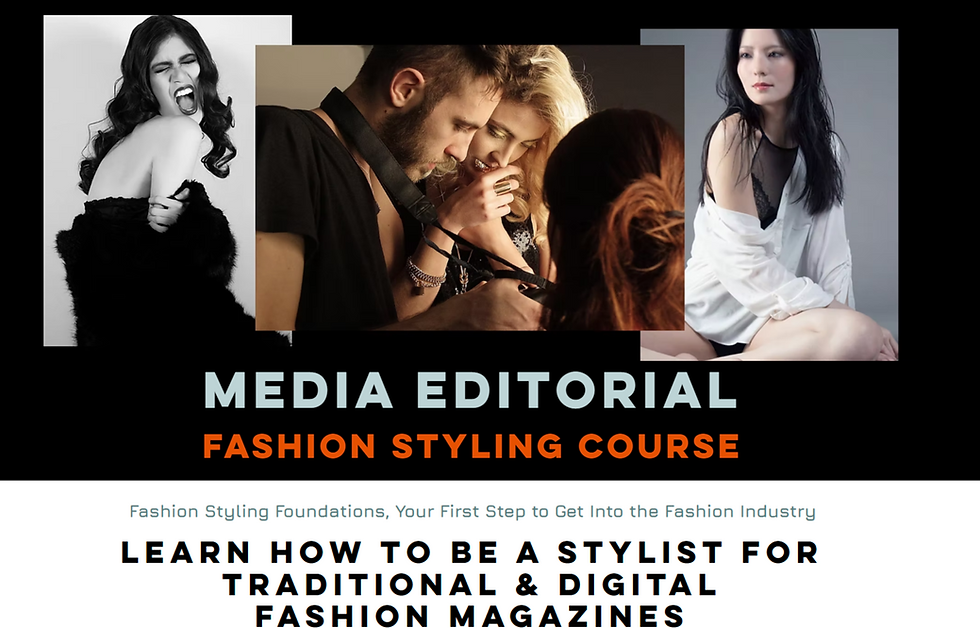
What Does a Media Fashion Stylist Really Do?
A media fashion stylist works at the intersection of creativity and strategy. Their role goes far beyond selecting clothes.
They:
Interpret concepts into visual narratives
Curate outfits that communicate a mood or message
Collaborate with photographers, models, and creative teams
Organize and direct photoshoots
According to industry insights from Vogue Business, editorial styling today is increasingly tied to branding and digital storytelling, making stylists key players in shaping how fashion is perceived.
In short, a stylist is not just selecting looks—they are building visual meaning.
From Inspiration to Image: The Styling Process
Every editorial image begins with a concept. This could come from art, cinema, street culture, or even a personal emotion.
The process typically includes:
Moodboard creation
Trend and visual research
Garment selection and coordination
Styling tests and adjustments
Final photoshoot execution
This journey—from abstract idea to final image—is what defines a professional stylist.
And it’s exactly what a structured learning experience helps you master.
The Role of Digital Media in Fashion Styling
Today, fashion lives everywhere: websites, social media, digital magazines, and campaigns.
This shift has changed styling in three key ways:
Faster visual production cycles
Stronger focus on personal identity and niche aesthetics
Greater importance of storytelling through images
An Online Media Editorial Fashion Styling Course allows students to understand how styling adapts to these platforms, where attention spans are short but visual impact must be immediate.

Can You Learn Editorial Styling Online?
One of the most common questions is whether creative skills like styling can really be learned online.
The answer is yes—if the course is practical and structured.
An effective course should include:
Real styling exercises
Guidance on building visual concepts
Insight into photoshoot organization
Portfolio development
Learning online also reflects the reality of the industry itself, which is increasingly digital and global.
Developing Your Creative Vision and Portfolio
Talent in styling is not just about taste—it’s about trained observation.
Through practice, students learn how to:
Recognize visual balance
Understand proportions and silhouettes
Build coherent looks
Develop a recognizable aesthetic
A strong portfolio becomes the bridge between learning and working. It shows not only what you can create, but how you think visually.
Based in Milan and founded by Angelo Russica, the school offers short, intensive courses designed to be practical and flexible. Students work on concrete styling projects, including photoshoot planning and image creation, often with direct guidance.
You can also explore related paths such as fashion styling or portfolio development through modular course combinations:https://www.milanfashioncampus.eu/women-fashion-styling-course
Final Thoughts: Becoming a Visual Storyteller
Editorial styling is not just about fashion—it’s about perspective.
An Online Media Editorial Fashion Styling Course can help transform your ideas into images, your intuition into skills, and your passion into a professional direction.
Because in today’s fashion world, those who can create compelling visuals don’t just follow trends—they define them.


Comments