

How to Style Photoshoot Outfits That Read on Camera
Updated: 18 hours ago
A photoshoot can expose every weak decision in an outfit. A hem that looked intentional in the fitting room may cut the leg line in half on camera. A beautiful black look can collapse into one flat shape. Learning to style photoshoot outfits means thinking beyond what is fashionable and asking a more professional question: what will the image communicate at first glance?

For aspiring stylists, this is where personal taste becomes visual direction. The strongest looks do not depend on expensive pieces or a crowded rack. They are built around a clear concept, a controlled silhouette, and choices that support the model, the setting, and the story.
Start With the Image, Not the Clothes
Before pulling a single garment, define the purpose of the shoot. Is it an editorial story, a commercial campaign, an e-commerce project, a personal styling portfolio, or social content for a new brand? Each objective asks for a different level of drama.
An editorial image can accommodate unexpected proportions, layered styling, and visual tension. A commercial beauty or accessories campaign needs clothing that frames the product without competing with it. For e-commerce, clarity is the priority: the fit, color, and details of the garment must be easy to see. Styling one look as though it can serve every purpose usually produces a confused result.
Write a short creative statement before you pull. It can be as simple as: “modern Italian tailoring with a sporty edge” or “soft, sun-faded femininity in an urban setting.” This sentence becomes your filter. If a garment is attractive but does not support the direction, leave it out.
Build a Visual Storyboard

A mood board is not decoration. It is a working tool that aligns the team before shoot day. Collect references for silhouette, pose, lighting, location, hair, makeup, accessories, and color. Then look for patterns. Are the shoulders sharp or relaxed? Is the color palette restrained? Does the styling feel polished, raw, playful, or severe?
Avoid copying one reference image from head to toe. Instead, identify why it works. Perhaps the image has a strong vertical line, a contrast between a delicate dress and heavy footwear, or one bright accent against neutral surroundings. Translate the principle into your own selection.
Style Photoshoot Outfits Around Silhouette

On camera, silhouette arrives before detail. The viewer notices the outline of the body, the relationship between volumes, and the way the look moves through the frame. This is why a simple outfit with excellent proportion often photographs better than an elaborate one with no structure.
Start by deciding where the volume belongs. If the jacket has broad shoulders or an oversized shape, balance it with a narrow skirt, fitted knit, or clean straight-leg pant. If the bottom half is wide, such as a full skirt or baggy trouser, create definition near the waist or upper body. Balance is useful, but it is not a rule that cannot be broken. An exaggerated oversized look may be exactly right for an avant-garde editorial, provided the proportions are deliberate.
Length matters as much as volume. A cropped jacket can lengthen the leg line, while a longer coat creates drama and movement. Check hems from the camera angle, not only in a mirror. Ask the model to sit, walk, turn, and raise their arms. A garment that twists, rides up, or reveals an unintended layer can disrupt an otherwise strong frame.
Fit Is a Styling Decision
Garments rarely arrive fitting every model perfectly. Professional styling often involves clips, fashion tape, pins, temporary hems, and careful layering. These adjustments should refine the image, not force an unsuitable garment onto the model.
Bring basic fitting tools to every shoot: safety pins, clips, tape, a small sewing kit, lint roller, steamer, and nude undergarment options. Preparation protects your creative choices. Wrinkled fabric, visible tags, and straps that appear unexpectedly are small details, but the camera records them all.
Use Color and Texture With Intention
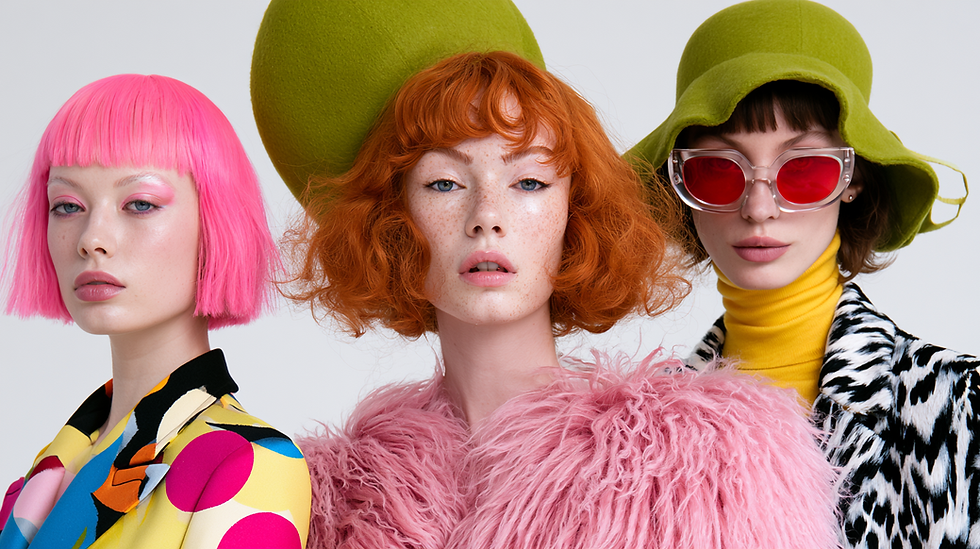
Color can establish mood, focus attention, and connect a look to the set. Begin with a limited palette. Two or three dominant colors are often enough, with neutrals used to give the eye a place to rest. If the background is busy, the outfit may need a cleaner color story. If the location is minimal, a saturated coat, bag, or shoe can become the visual anchor.
Be careful with black. It is powerful, elegant, and useful, but in low light it can lose shape. Mix finishes to maintain depth: matte wool with polished leather, sheer fabric with dense knitwear, or black denim with a reflective accessory. White creates the opposite challenge. It can become overexposed under bright lighting, so texture, tailoring, and thoughtful underlayers become especially important.
Prints require editing. A single graphic print can give the image energy, but several competing patterns can make the model disappear. If you combine prints, connect them through one shared color or vary their scale so one clearly leads.
Texture is equally valuable. Denim, sequins, brushed wool, silk, mesh, cotton poplin, and leather respond differently to light and movement. A textured look can feel rich even when the color palette is minimal. Test fabrics under the actual lighting when possible. What feels luxurious by hand may reflect awkwardly under flash.
Accessories Should Finish the Story
Accessories are not an afterthought. They can shift a look from everyday to editorial, establish an era, or create a focal point near the face. But their role should be precise. If the statement is in the garment, choose quieter accessories. If the clothing is intentionally simple, a dramatic earring, sculptural belt, gloves, or distinctive shoe can carry the styling concept.
Consider scale in relation to the crop. A close portrait may need bold earrings or a strong collar because small details will disappear. In a full-body image, the shoe matters more than many stylists expect. Footwear changes posture, proportion, and the attitude of the model. A sneaker, pointed heel, heavy boot, and delicate sandal can each tell a different story with the same dress.
Check accessories from every angle. Sunglasses can hide the eyes when the concept needs connection. Metallic jewelry can create distracting reflections. A bag may look perfect standing still but awkward when held. Test, adjust, and photograph a few quick frames before committing.
Plan More Looks Than You Need
A well-organized pull gives you options without losing focus. Build complete looks rather than arriving with separate garments and hoping they will work together. For every hero look, prepare one or two alternatives: a different outer layer, shoe, belt, or styling variation. This allows the team to respond to weather, location changes, fit issues, or a direction that evolves during the shoot.
Keep each look together on a rack or in a garment bag, with shoes and accessories clearly assigned. Photograph the final outfit on a hanger or mannequin before the shoot begins. This simple habit helps you reconstruct a look quickly and prevents pieces from being mixed between changes.
A cohesive shoot does not require every outfit to match. It requires continuity. Repeated colors, related shapes, similar levels of polish, or a consistent attitude can make several different looks feel like one story.
Collaborate Like a Professional Stylist
Styling is collaborative. The photographer sees composition and light. The hair and makeup artist understands how beauty choices affect the face. The model knows how a garment feels in motion. Listen to each perspective while protecting the central concept.
Communicate clearly before the day of the shoot. Share references, the shot list, expected changes, and any garments that require special handling. On set, stay attentive to details between frames. Straighten a collar, check the tuck of a shirt, smooth a sleeve, and watch for jewelry that turns the wrong way. These small interventions separate a polished final image from a nearly finished one.
If you are building a portfolio, show range through intention, not random variety. One refined tailoring story, one expressive editorial direction, and one product-focused look can demonstrate more skill than ten unrelated outfits. At Milan Fashion Campus, practical styling work is treated as visual problem-solving: learning how to develop an idea, edit it, and make it communicate through an image.
The most memorable photoshoot outfits do not simply look good on a rack. They give the model a role, give the photographer a clear shape to frame, and give the audience a reason to stop scrolling. Start with the story, edit without hesitation, and let every choice earn its place in the picture.

Comments