

Angelo Russica: From Gianni Versace’s Atelier to a Global Vision of Fashion Education
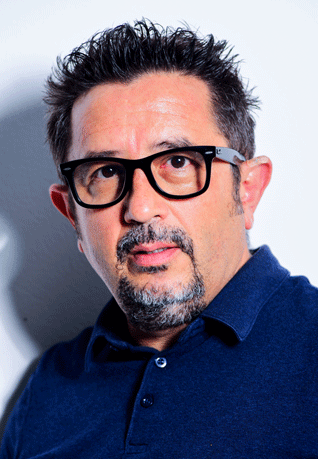
Designer, consultant, educator and founder of Milan Fashion Campus, Angelo Russica has built a career that moves between two worlds often considered separate: the creative energy of the fashion studio and the complex industrial system that transforms an idea into a product.

Follw us in Instagram
Angelo Russica
In fashion, careers are rarely linear. They are shaped by encounters, ateliers, factories, international experiences and, above all, by the ability to understand change.
Angelo Russica’s professional journey reflects exactly this kind of evolution.
From his early years in Milan to working alongside Gianni Versace, from the industrial structure of El Corte Inglés in Spain to consulting assignments with major Italian and international fashion groups, Russica developed a perspective on fashion that extends far beyond design alone.
It is a perspective that would eventually lead him to a new chapter: education, and the creation of Milan Fashion Campus.

The Milan Years: Learning Fashion From the Inside
After completing his fashion studies in Milan, Angelo Russica began his professional career assisting Italian designer Giorgio Correggiari.
It was an interesting moment in Italian fashion history.
Within that creative environment, Russica also crossed paths with two young designers who were beginning to define their own vision: Domenico Dolce and Stefano Gabbana.
Before the global fashion houses, international campaigns and worldwide recognition, Milan's fashion scene was made of studios, assistants, designers, manufacturers and an intense exchange of ideas.
For a young designer, this meant learning fashion directly from the people creating it.
After a temporary interruption for military service, Russica returned to the industry and joined Barbas, an Italian menswear company.
But one of the defining chapters of his career was still ahead.
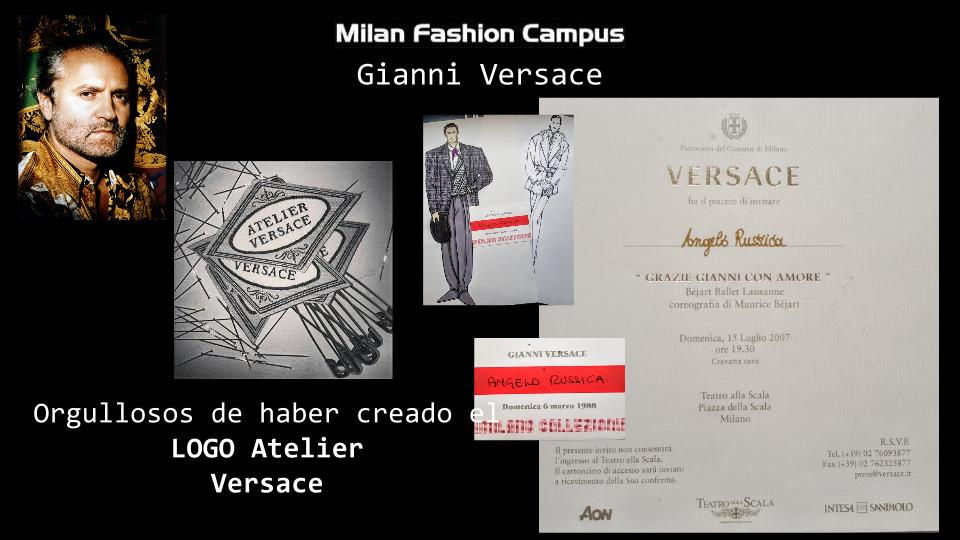
Four Years Alongside Gianni Versace
Russica subsequently joined the creative environment of Gianni Versace as an assistant designer, beginning a four-year professional experience that would strongly influence his understanding of fashion.
These were years spent inside one of the most dynamic periods of Italian fashion.
Russica contributed to both womenswear and menswear collections connected with the Genny, Spazio and Versus lines.
Working in that environment meant experiencing fashion not from the outside, but from inside the process: observing how an initial inspiration develops into a collection, how silhouette, fabric, colour and styling interact, and how a designer's identity must remain visible across different products and markets.
Versace represented creativity at its most expressive.
But Russica’s subsequent career would expose him to another equally important dimension of fashion: industry.
Beyond the Atelier: Understanding the Fashion Industry
A designer may create the idea, but fashion exists within a much larger ecosystem.
Production, merchandising, sourcing, distribution, manufacturing and retail ultimately determine how that idea reaches the market.
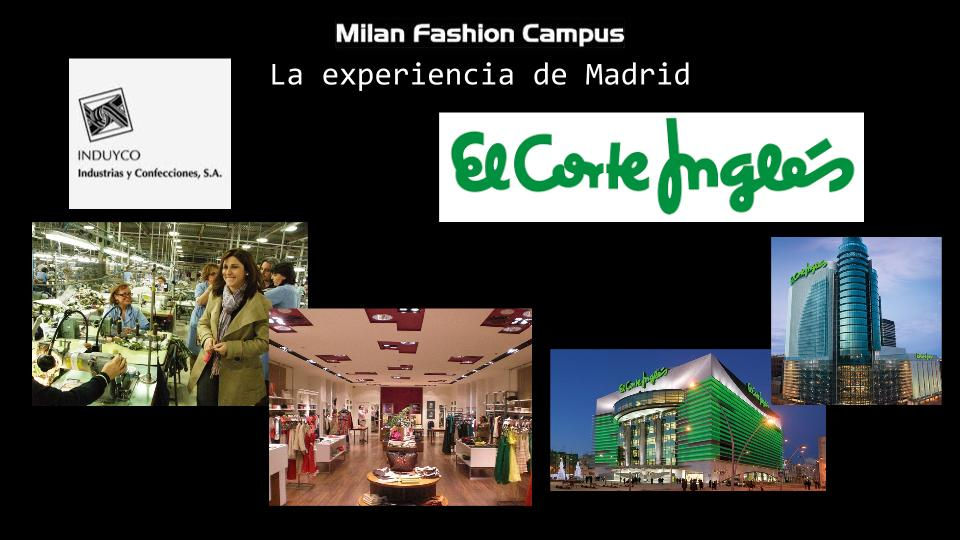
Russica experienced this dimension directly when he moved to Madrid, working within Induyco Group, the fashion and manufacturing organisation historically connected with Spanish retail group El Corte Inglés.
The contrast was fundamental.
On one side was the creative intensity of an Italian designer's atelier. On the other was the structure and scale of an industrial fashion organisation.
Rather than seeing these two worlds as opposites, Russica began to understand them as complementary.
Creativity needs industry.
Industry needs creativity.
And a fashion professional capable of speaking both languages has a very different understanding of how the business actually works.
That dual perspective would become one of the recurring themes of his career.
From Italian Fashion Groups to International Consulting
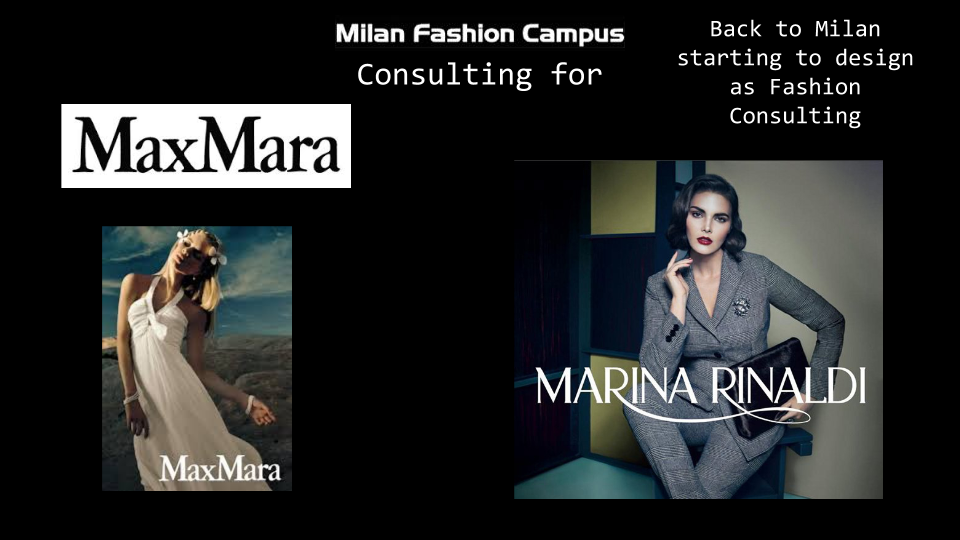
Following his experiences in Italy and Spain, Russica expanded his work into fashion consulting.
His professional path included collaborations and consulting activities connected with important companies and groups such as Marzotto Group, Max Mara Group and Miroglio Vestebene.
These assignments moved his career increasingly towards the intersection between design, product development and industry.
Fashion consulting requires a different mentality from designing a single collection.
It means understanding the identity of a company, its customer, positioning, price point, distribution and commercial objectives while preserving a coherent creative direction.
Russica's international experience continued outside Europe.
In Japan, he worked with companies including World Co. Ltd and King Company, gaining direct exposure to a market with its own sophisticated relationship with Italian design and European fashion.
Later, his professional activities expanded to China, including consultancy with Lancy Group.
Long before today's fashion industry became truly globalised, working across Italy, Spain, Japan and China offered Russica a valuable understanding of how differently fashion can be perceived, produced, marketed and consumed depending on culture.
It also reinforced an idea that would eventually become central to his educational philosophy:
there is no single type of fashion student, just as there is no single way to build a career in fashion.

From Fashion Professional to Fashion Educator
After years spent working across different sides of the industry, Russica began translating professional experience into education.
The concept that eventually became Milan Fashion Campus initially developed through online fashion education before evolving into a physical school in Milan.
The approach was deliberately different from the traditional academic model.
Instead of assuming that everybody interested in fashion should commit to a multi-year programme, Milan Fashion Campus developed an educational structure based around short, intensive and flexible courses.
The idea was simple but important.
A student might need three years of education.
But another student might need only three weeks.
A professional buyer may want to update a specific skill. A university graduate may want to prepare a portfolio. Someone considering a career change may first want to understand whether fashion is really the right world for them.
For Russica, fashion education therefore became less about fitting students into a rigid programme and more about identifying what they actually needed to learn.
Learning Fashion Through Experience
This philosophy explains the practical orientation behind Milan Fashion Campus.
Fashion cannot be understood entirely through theory.
A styling student needs to create looks.
A fashion design student needs to develop concepts and collections.
An editorial styling student should understand what happens during a real photographic shoot: how to communicate with photographers, models and make-up artists, how to prepare a project and how to react when something unexpected happens on set.
Students also need to understand deadlines, feedback, collaboration and pressure.
These are not secondary skills.
They are part of working in fashion.
Russica's own career — moving between creative studios, fashion companies, international markets and consulting projects — strongly informs this approach.
The objective is not simply to teach students what fashion looks like.
It is to help them understand how fashion works.
Milan as a Classroom
Location also plays an important role in the Milan Fashion Campus experience.
The school is based in central Milan, close to Corso Buenos Aires and within easy reach of the city's principal fashion and shopping districts.
But the real advantage is not simply geographical.
Milan itself becomes part of the learning environment.
Fashion stores, exhibitions, showrooms, trade fairs, Fashion Week, visual merchandising, street style and Italian lifestyle provide students with a continuous source of references.
For international students in particular, studying fashion in Milan means observing the industry beyond the classroom.
The city becomes part of the course.
A Different Generation of Fashion Students
Today's fashion student is very different from the student of twenty or thirty years ago.
Some are teenagers considering their future studies.
Others already have university degrees.
Some work in unrelated industries and are considering a career change.
Others already operate professionally as designers, stylists, buyers, entrepreneurs or image consultants and simply need to update their expertise.
Milan Fashion Campus was developed around this increasingly diverse audience.
Its classes bring together different ages, nationalities and levels of experience, creating an environment in which professional experience and fresh perspectives can coexist.
Courses are designed to remain accessible to beginners while allowing more experienced participants to develop specific skills.
This flexibility has become one of the school's defining characteristics, with many short courses able to start every Monday, allowing international students to build an educational experience around the time they actually have available.
Taking Italian Fashion Education Beyond Milan
Russica's original experience of working internationally also influenced the expansion of Milan Fashion Campus beyond Italy.
The school's educational activities have progressively reached international audiences through online learning and educational partnerships.
Its Women's Fashion Styling Course, for example, has been licensed internationally in markets including Uzbekistan, Mongolia and Thailand.
The concept reflects a broader ambition: Italian fashion knowledge should not necessarily remain confined within Italy.
Technology, online education and international partnerships make it possible to share that expertise with students who may never have the opportunity to spend several years studying in Milan.
At the same time, the Milan campus remains the physical centre of the project — a place where students can experience fashion within the cultural and professional environment from which the methodology originates.
Fashion Education After a Career in Fashion
There is a fundamental difference between studying fashion and spending decades working inside it.
The latter inevitably changes the way fashion is taught.
A career that has moved from Giorgio Correggiari to Gianni Versace, from Italian fashion companies to the industrial organisation of Induyco and El Corte Inglés, and from consulting projects in Europe to professional experiences in Japan and China, creates an understanding of fashion that cannot be reduced to a single discipline.
Design matters.
But so does production.
Styling matters.
But so does understanding the customer.
Creativity matters.
But so does knowing how to transform creativity into something that can exist within the real fashion market.
This is perhaps the most important thread running through Angelo Russica's career.
From the Atelier to the Classroom
Angelo Russica's story is therefore not simply the story of a designer who once worked alongside one of the great names of Italian fashion.
It is the story of someone who experienced fashion from multiple perspectives.
From the designer's table to the industrial fashion company.
From Milan to Madrid.
From Italy to Japan and China.
From creating fashion to consulting for fashion companies.
And eventually, from practising the profession to teaching a new generation how to enter it.
Milan Fashion Campus represents the latest stage of that journey.
Its philosophy reflects a career spent discovering that fashion is never only about clothes.
It is about ideas, people, industry, culture, business, experience and continuous learning.
And perhaps that is the lesson worth passing on most.
In a profession that constantly reinvents itself, the ability to remain curious, adapt and keep learning may be the most enduring fashion skill of all.
Comments